Why the Economic Calendar Matters
This is why we use economic calender
– Identify events that can cause significant volatility
– Understand which assets will be affected
– Avoid unnecessary exposure before major releases
– Anticipate weekly liquidity and expansion phases
– As a rule, I avoid trading before the first high-impact news event of the week.
– On Mondays, when there’s typically a lack of high impact news we usually see accumulation or a judas swing in the weekly profile
News does not create random movement.
It often acts as a catalyst that drives price toward liquidity.
Why the Economic Calendar Matters
Step 1: Use a Reliable Calendar (Forex Factory)
The platform I use is Forex Factory because it provides:
– Clear impact classification (Red / Orange / Yellow)
– Easy asset-based filtering
– Clean weekly layout
– Reliable release timing
The goal is not to see all news –
The goal is to see only relevant news.
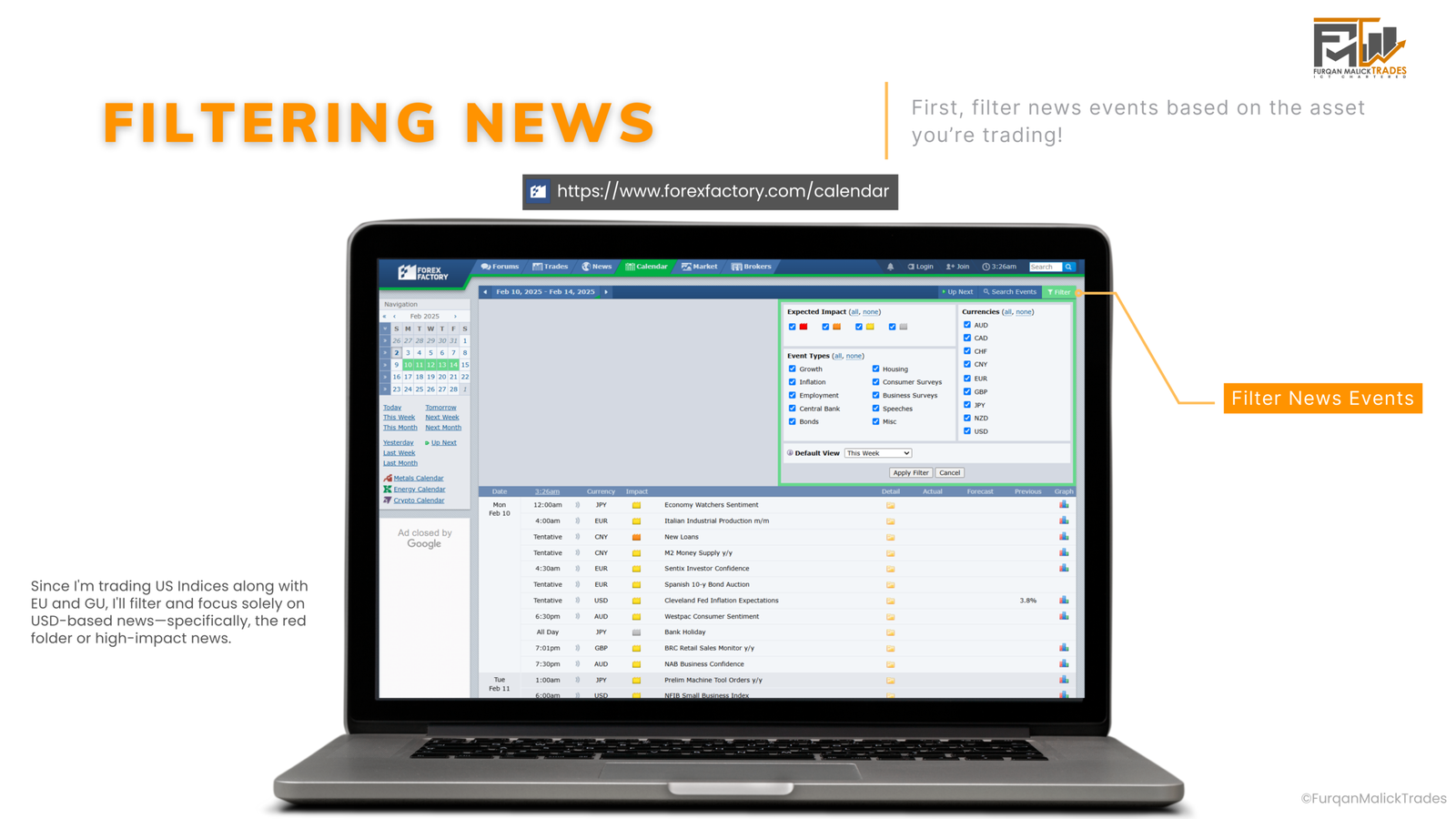
Step 2: Filter News Based on the Asset You Trade
One of the biggest mistakes traders make is watching every event.
Instead:
– Trading NASDAQ → Focus on USD news
– Trading EURUSD → Focus on USD and EUR
– Trading Gold (XAUUSD) → Focus primarily on USD
Filtering removes noise and increases clarity.
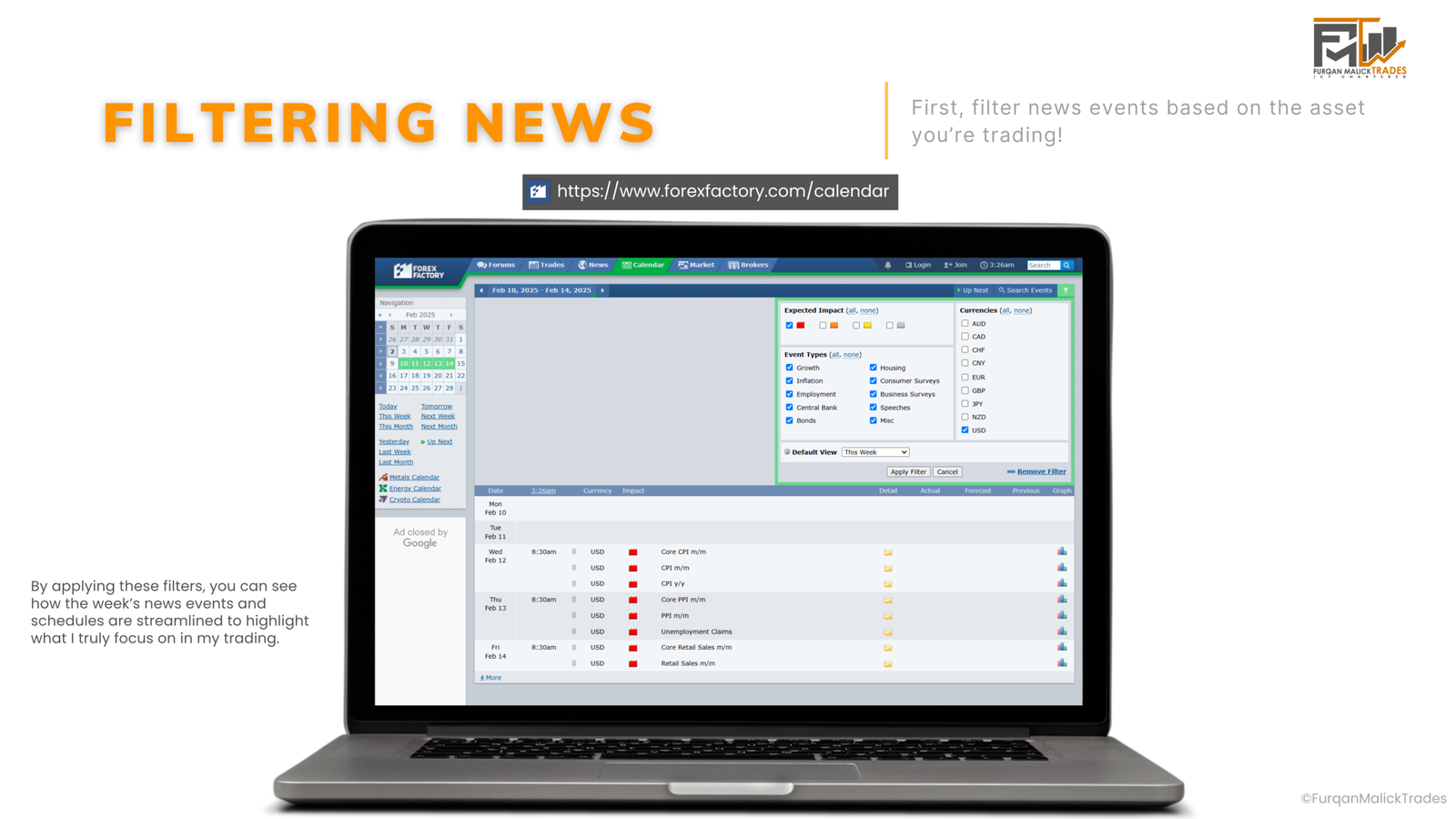
After applying filters, only relevant events remain.
This allows focus on what truly impacts your instrument.
Step 3: Categorize News by Impact
Not all the red folder news has the same weight.
High Impact
– CPI
– Non-Farm Payroll (NFP)
– FOMC Press Conference
These events bring strong volatility and liquidity grabs.
Not all news has the same weight.
Protocol
– Avoid trading before the release
– Do not execute during the release
– Observe post-news structure
– Wait for liquidity grab and displacement
– Enter only after confirmation
High-impact events often create stop hunts before real direction forms.
Medium Impact
– Core CPI
– PPI
– FOMC Meeting Minutes
These may create volatility, but usually require confirmation.
Protocol
– Avoid trading immediately before release
– Observe reaction
– Enter after structural confirmation
Low Impact
The rest are minor economic releases.
Protocol
– Usually, no restrictions
– Still respect the overall market context
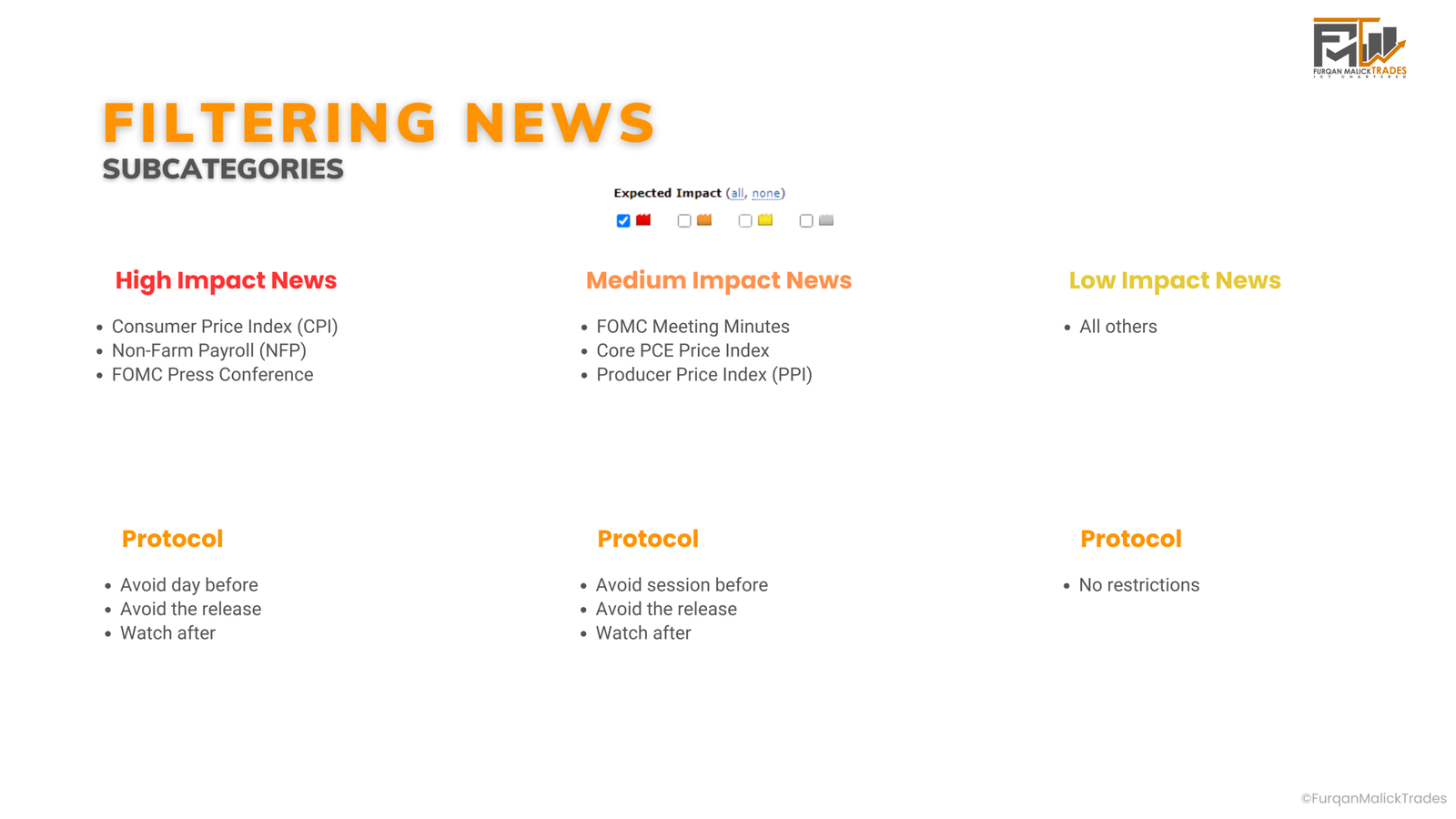
Example Breakdown: How to Read and React to the Economic Calendar
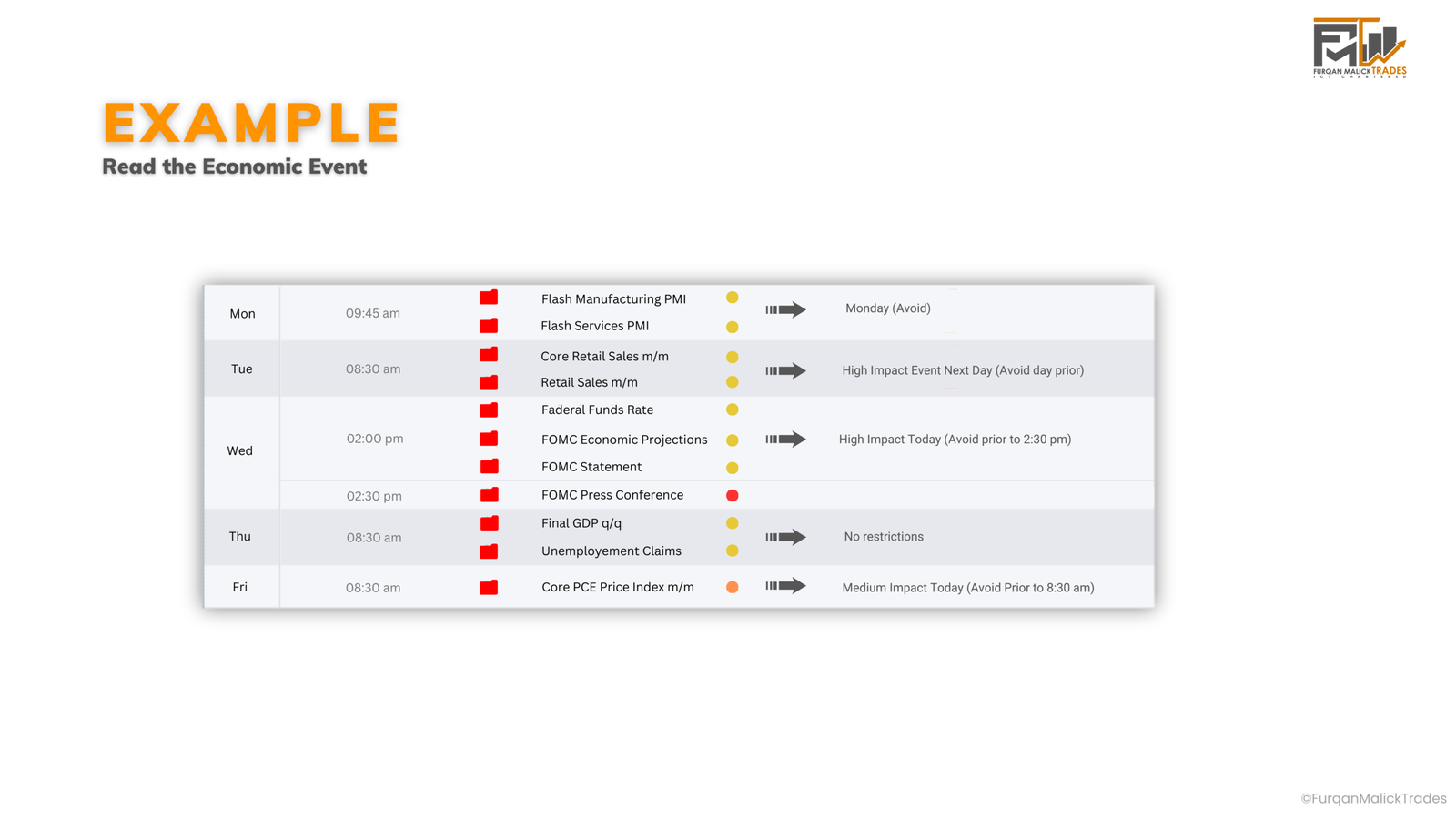
Using the example above, here’s how we approach each trading day based on news impact and weekly structure:
– Monday
Although there is scheduled news, we generally avoid Mondays.
Monday often lacks meaningful liquidity and directional clarity, and as a rule, we also avoid trading before the first high-impact news of the week.
– Tuesday
We avoid trading on Tuesday as well because Wednesday has a major high-impact event (FOMC Press Conference).
As a rule, we do not trade the day before a “Big 3” high-impact event, since the market is usually in accumulation or manipulation mode.
– Wednesday
Wednesday is a high-impact news day.
We wait until after 2:30 PM, once the FOMC Press Conference is released and volatility stabilizes.
After the release, the market often reveals its true intent, making post-news trading more structured and safer.
– Thursday
Only low-impact news is scheduled.
This allows us to trade without restrictions, following our normal execution model and higher-timeframe bias.
– Friday
A medium-impact news event is scheduled at 8:30 AM.
We avoid trading before the release and look for opportunities after the news, once price action becomes cleaner and more directional.
Example 1: How News Shapes Weekly Structure (NASDAQ)
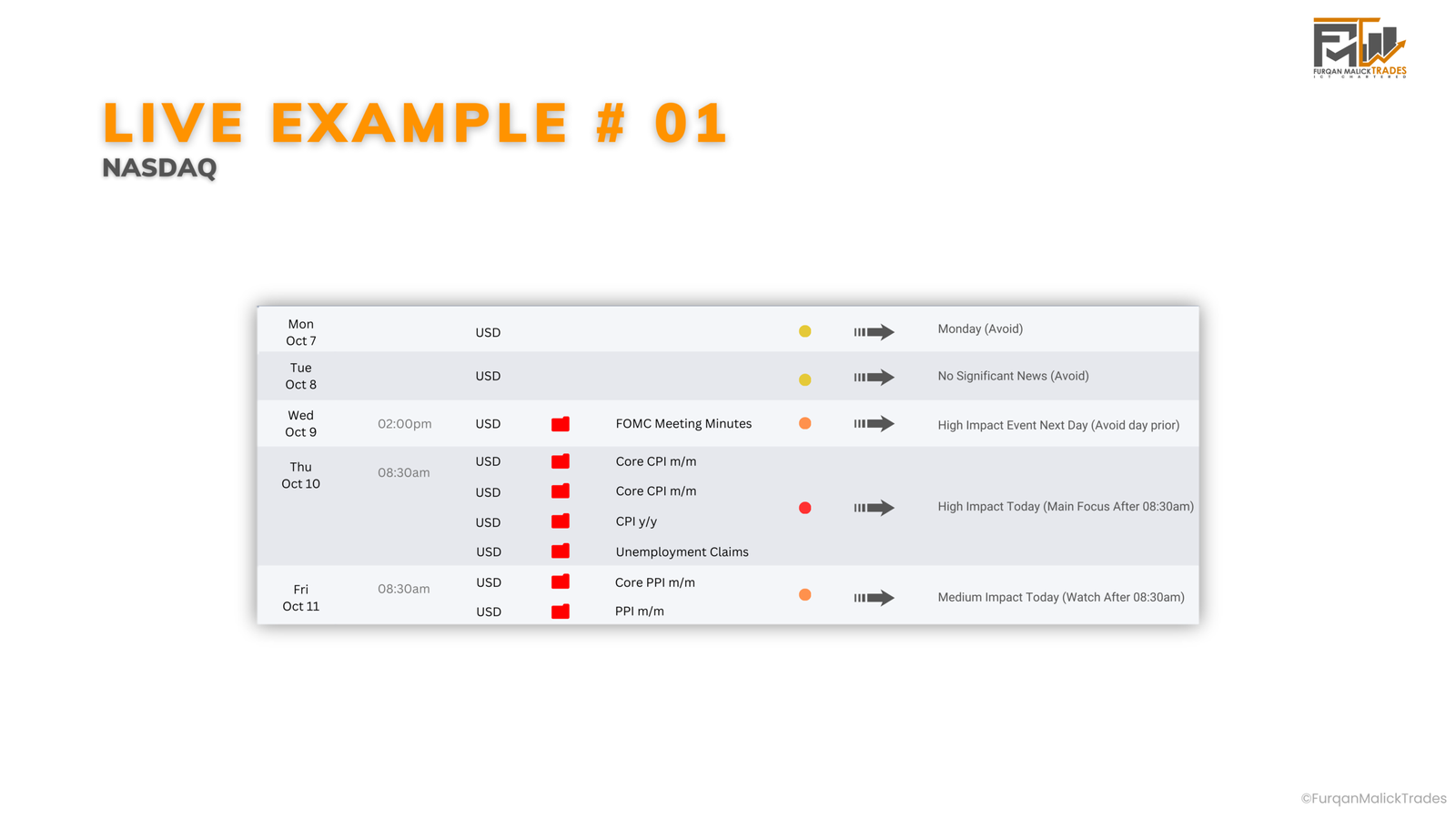
Economic events often align with weekly liquidity patterns. As per the economic calender major focus is to execute on Thursday
Example Scenario:
– Monday → As a rule, avoid.
– Tuesday → Low of the Week forms (Classic expansion weekly profile means if LOTW/HOTW forms on Monday / Tuesday, Price is likely to expand till Thursday)
– Wednesday → Day before high-impact news, avoid
Buy side liquidity is still open and expecting Thursday to trigger a draw on liquidity, and it is a potential opportunity to catch.
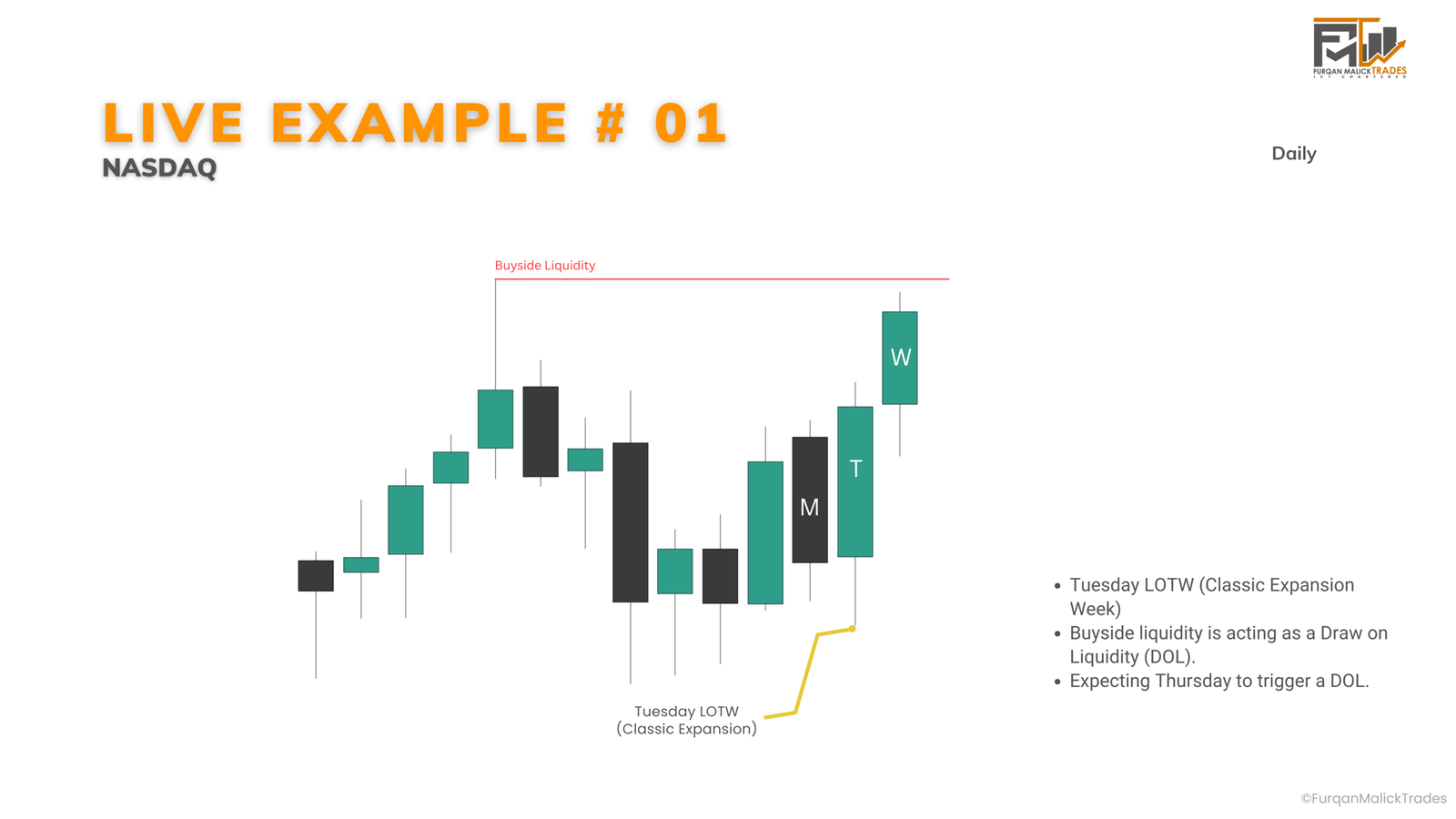
– On Thursday, News pushes price into a higher timeframe imbalance
– 5-minute confirmation → Execution
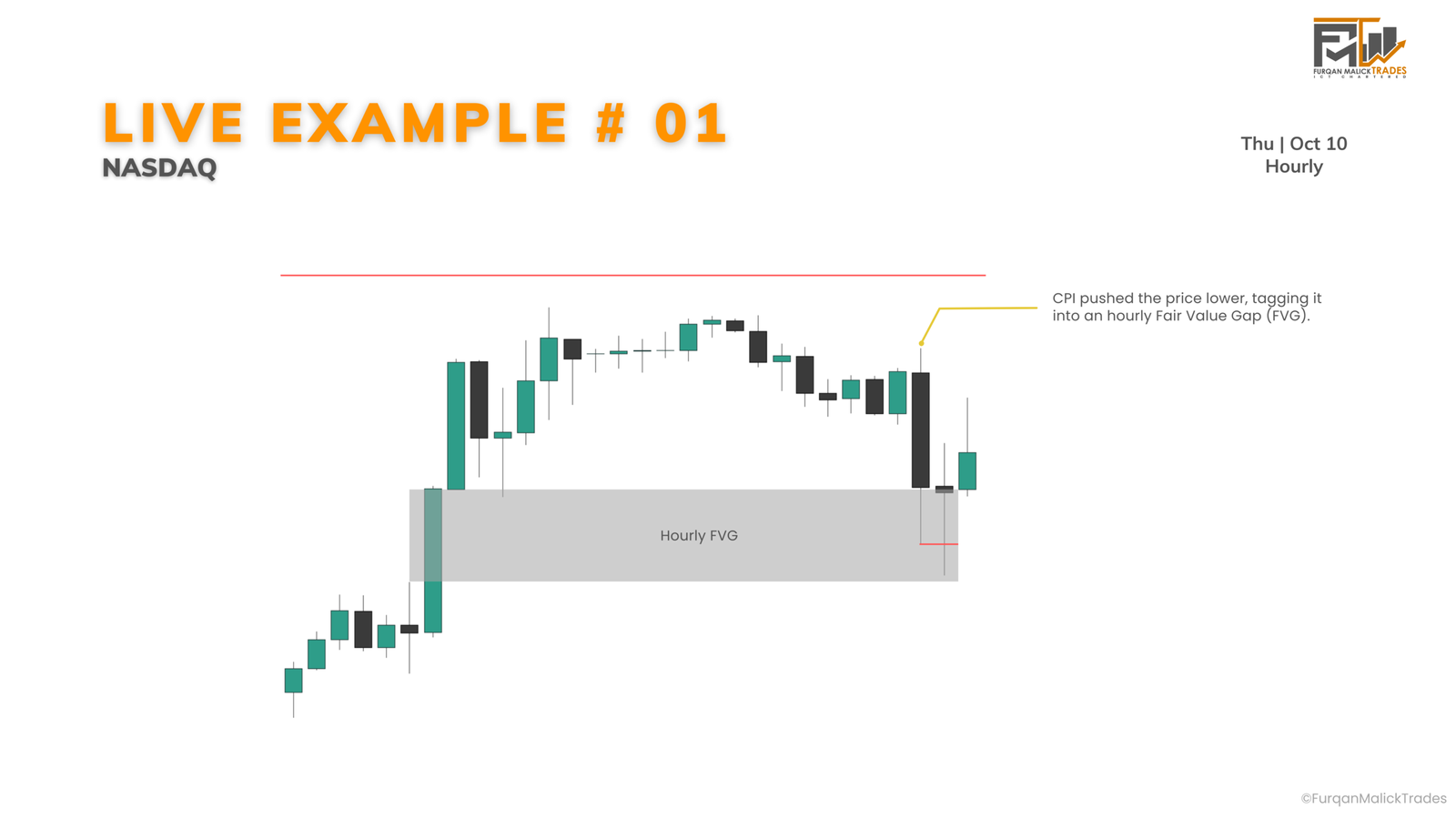
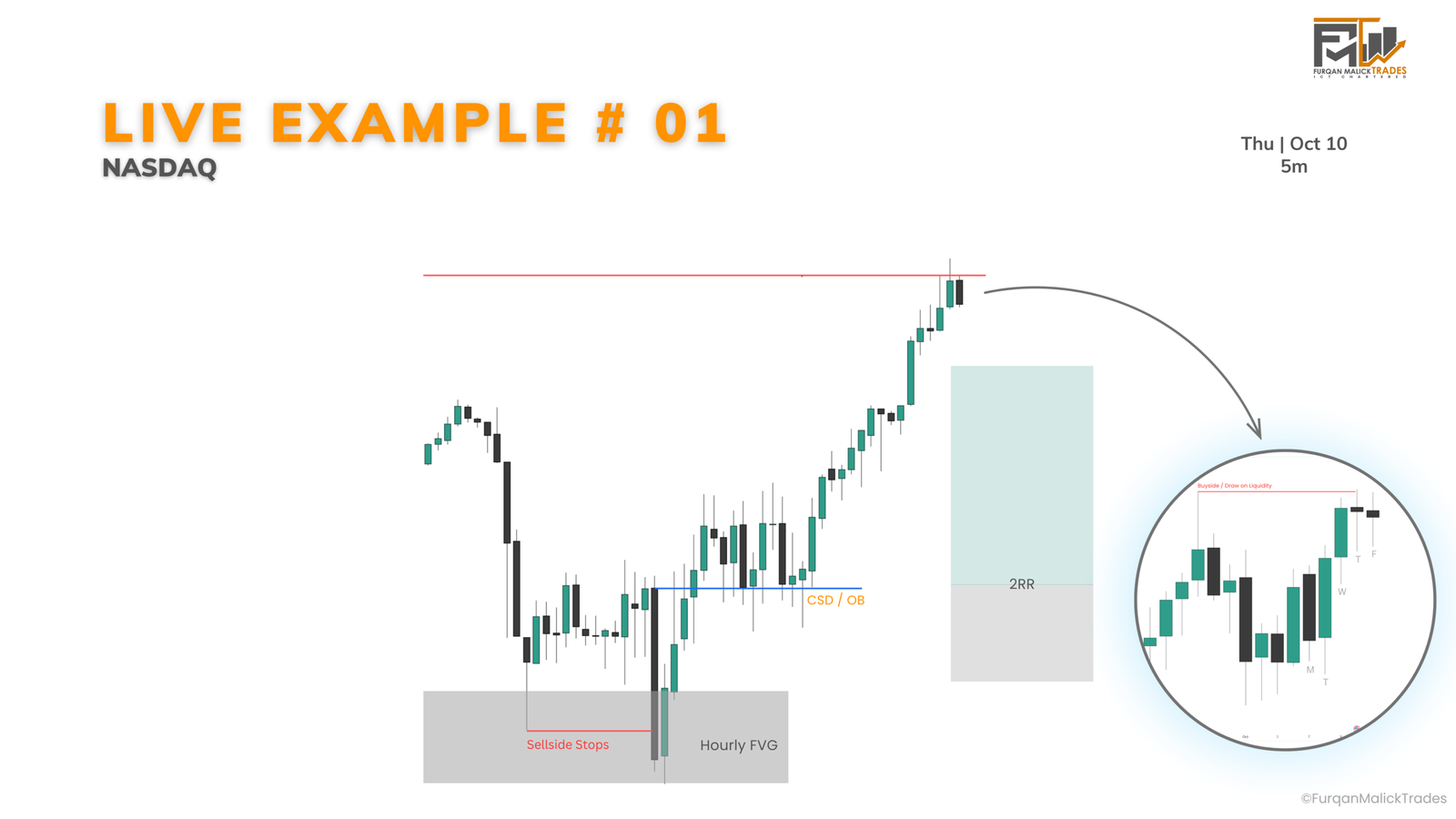
The news does not create the bias. It accelerates the move toward liquidity.
Special Case: NFP Week Protocol
NFP week behaves differently from a standard week.
My NFP Action Plan:
– Monday → Avoid trading
– Tuesday–Wednesday (AM session) → Trade cautiously
– Thursday → Lower probability
– Friday → Wait at least 30 minutes after NFP release
Why?
Because NFP creates:
– Extreme volatility
– Aggressive stop hunts
– Liquidity sweeps
– False expansions
Patience is essential during NFP week.
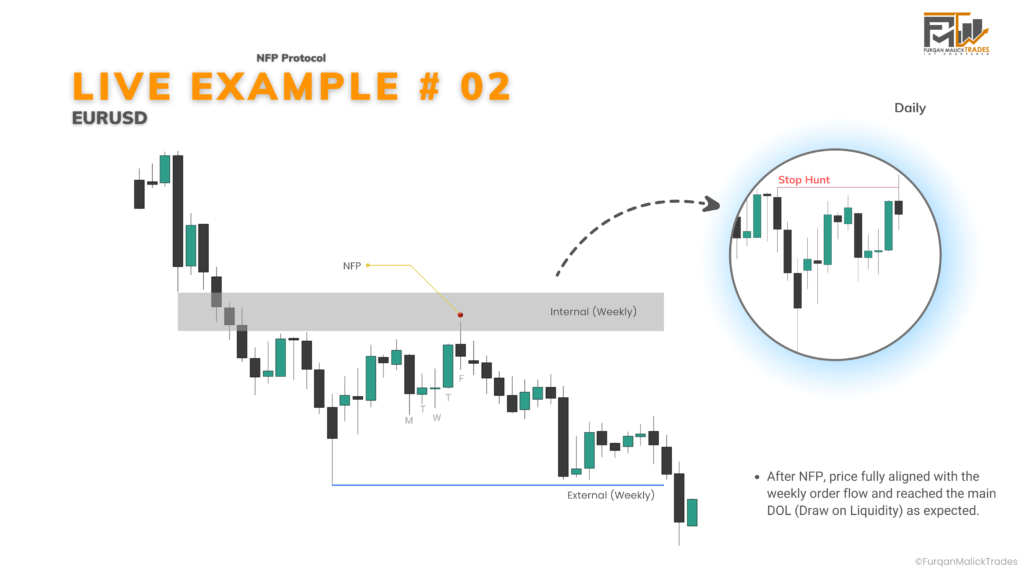
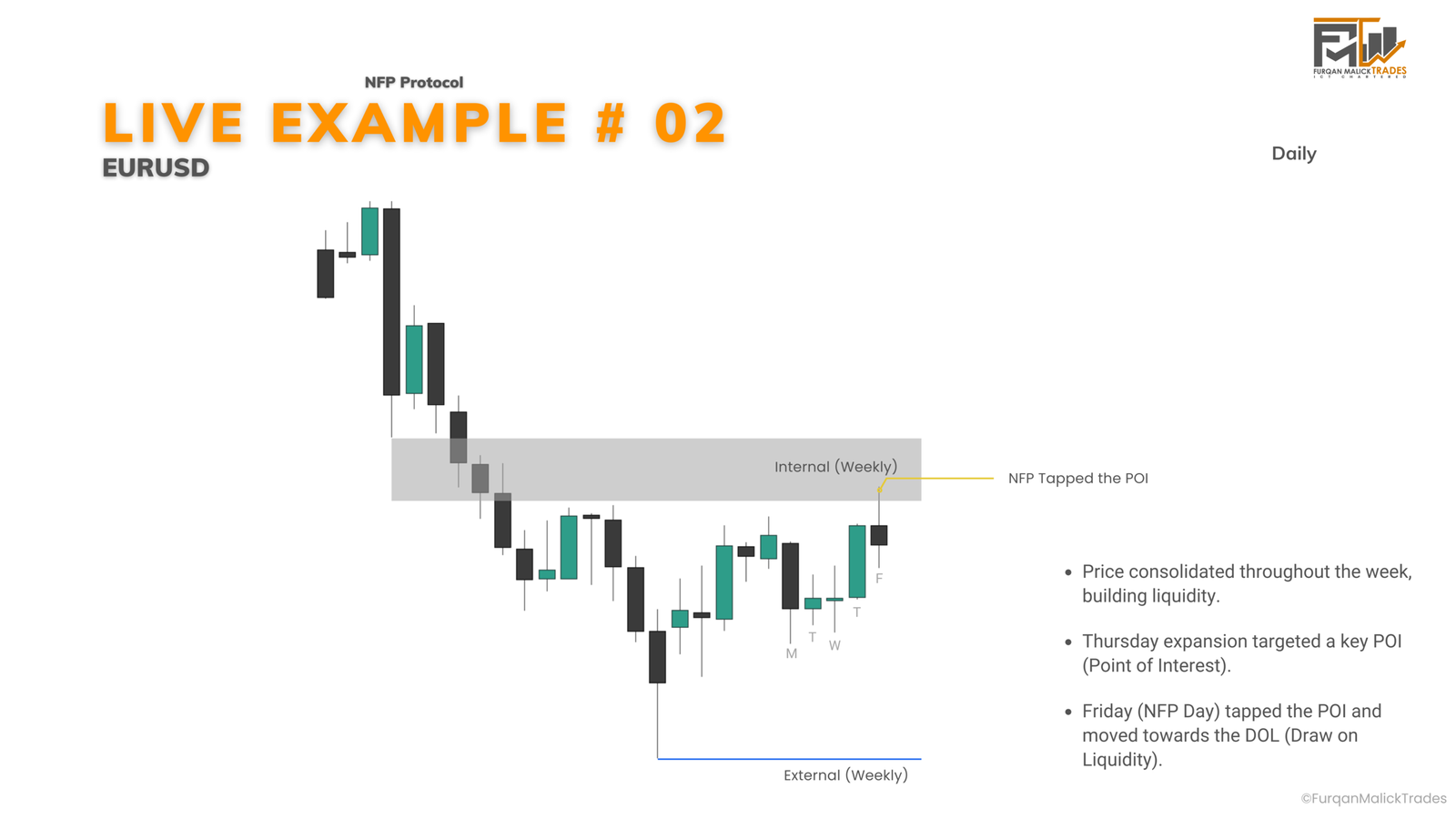
Live Example: EURUSD During NFP Week
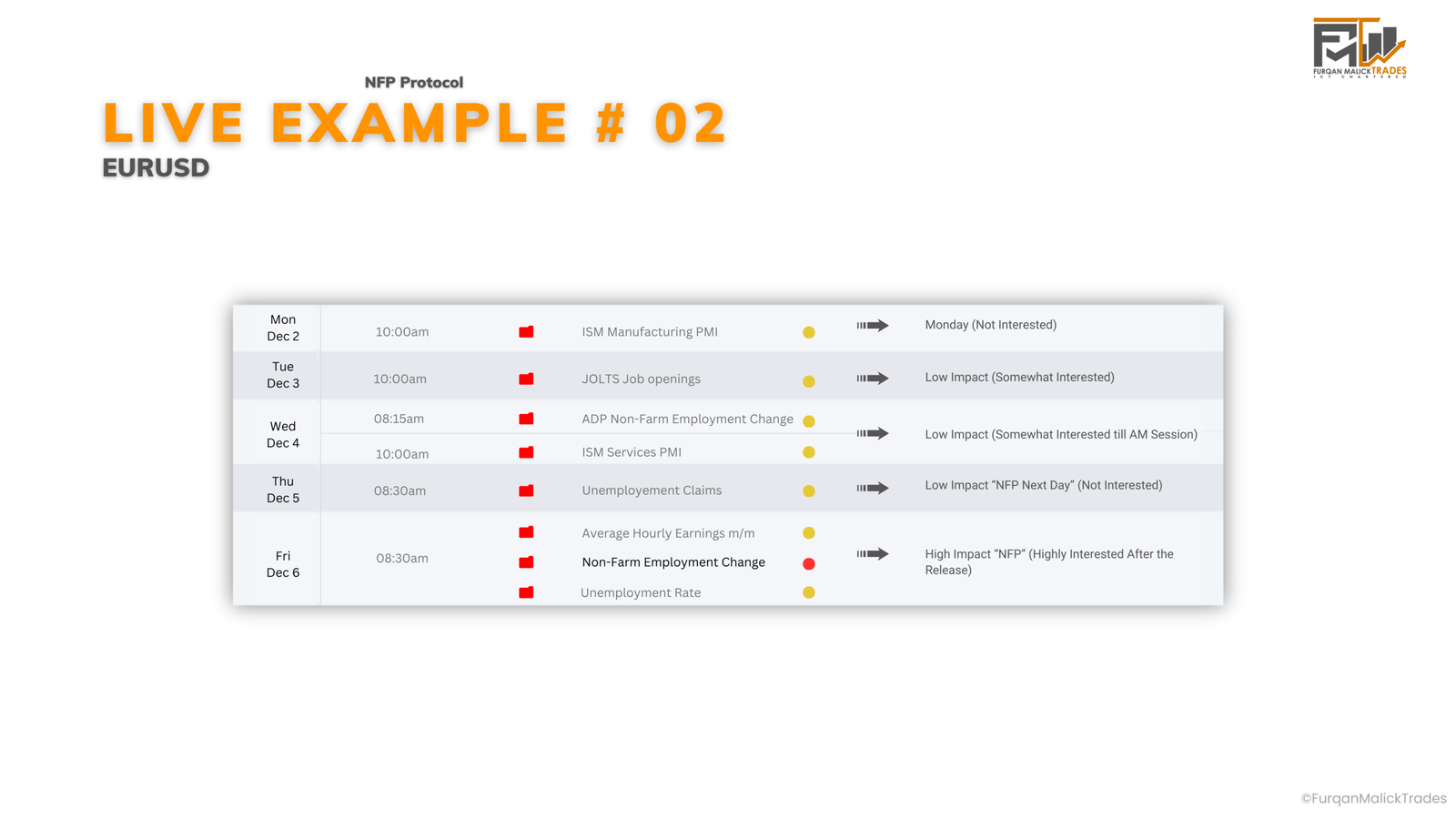
As per the rules, we’ll only execute the trade on Friday (Port-NFP)
Example breakdown:
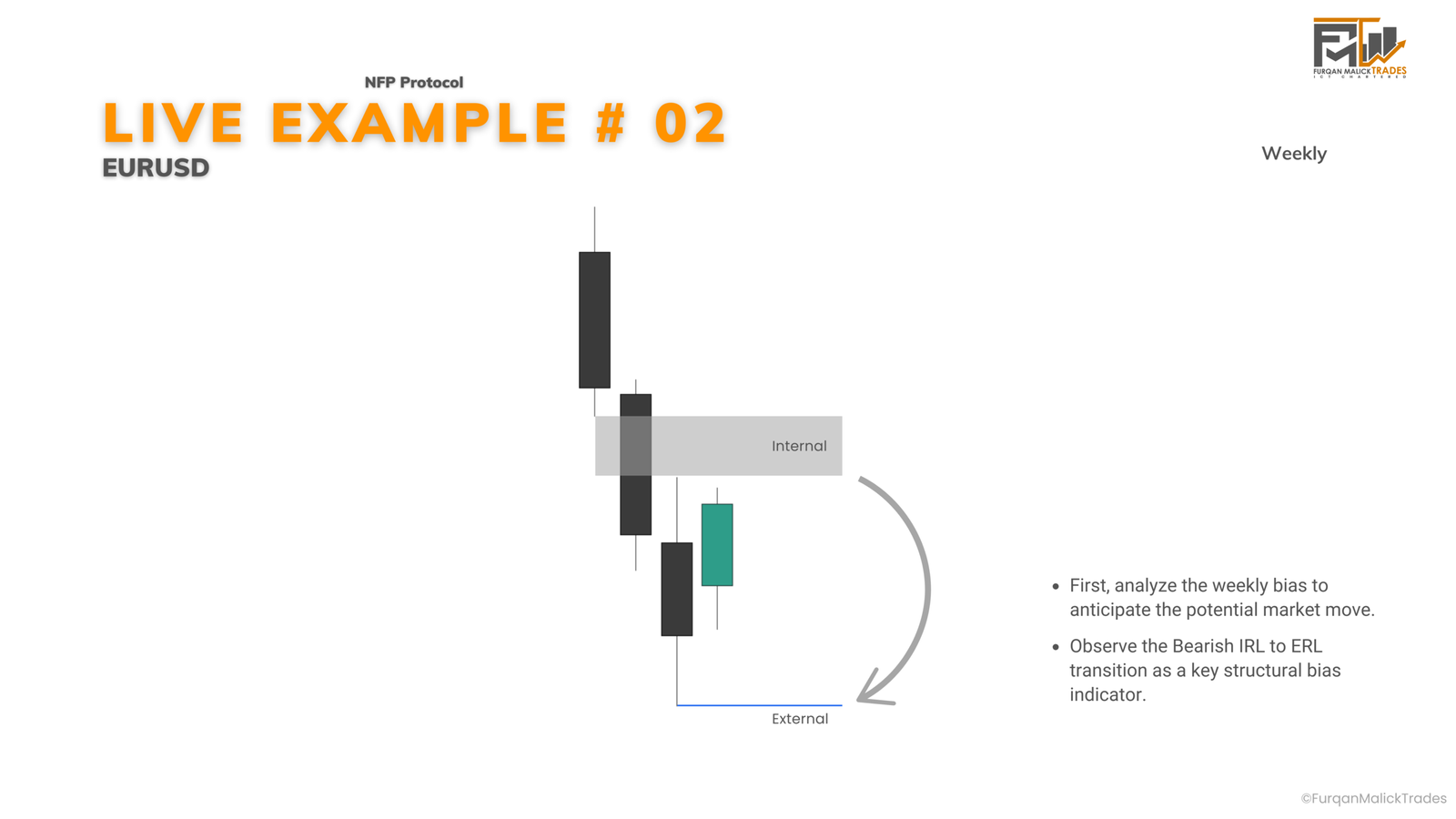
1. Weekly bias forms (Internal to External Liquidity)
2. Daily structure builds internal liquidity
3. Friday NFP taps higher timeframe POI
4. Expansion toward Draw on Liquidity
This demonstrates that:
News is timing. Structure is direction.
Core Principles to Remember
1. The economic calendar is for preparation — not prediction.
2. News determines timing.
3. Structure determines direction.
4. Liquidity determines target.
5. Discipline determines profitability.
Professional trading is not about reacting emotionally to headlines.
It is about planning around volatility.
Final Thoughts
Filtering and approaching the economic calendar correctly transforms trading consistency.
– Instead of fearing news, learn to respect it.
– Instead of guessing direction, prepare for volatility.
– Instead of trading randomly, follow a structured protocol.
The economic calendar is not a threat.
It is a tool – when used correctly.
YouTube Videos
1- Detailed breakdown of economic calendar (Latest)
1- Economic Calendar (ii)
1- Economic Calendar (iii)