

Step 1: Pre-Market Gameplan (Bias & Context)
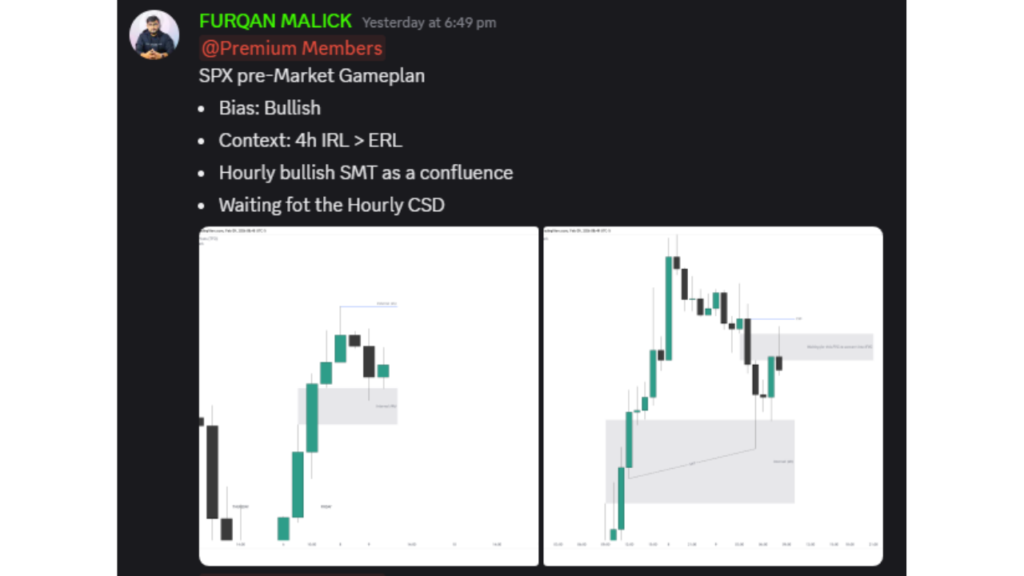
Before the New York session began, a clear pre-execution game plan was shared inside the premium community.
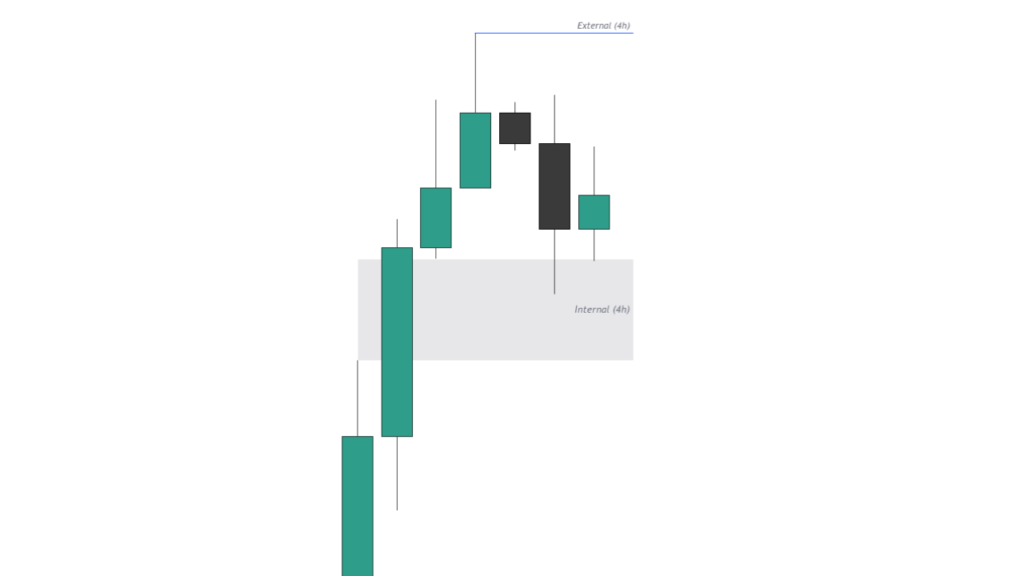
Higher Timeframe Bias
- Market: S&P 500
- Bias: Bullish
- Context: IRL to ERL
This higher-timeframe structure suggested continuation rather than reversal.
(4H IRL → ERL chart attached below)
Step 2: SMT Confirmation (Contextual Strength)
To strengthen the bullish narrative, strength pair analysis was applied.
SMT Observation
- Hourly Bullish SMT between S&P 500 and NASDAQ
(Hourly SMT chart attached below)
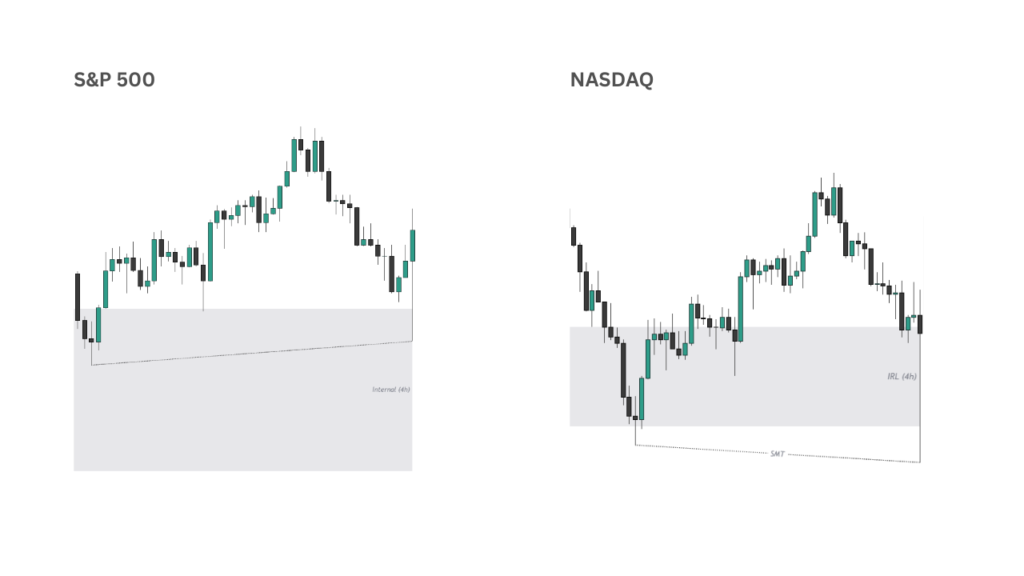
This confirmed that:
- Weakness was present in correlated asset (NASDAQ)
- Strength remained in SPX
- BSL liquidity was still the objective
Step 3: Execution Conditions Defined (Before Market Open)
The execution plan was not reactive – it was predefined.
Execution Rules
- Execution Timeframe: 5 minutes
- Execution Condition:
- Wait for CSD (Change in State of Delivery) on 1H or 5M
- Wait for CSD (Change in State of Delivery) on 1H or 5M
No trades before the open. No anticipation. Only confirmation.
(Pre-market gameplan screenshot shared with my community attached here)
Step 4: What Happened at the New York Open (9:30 EST)
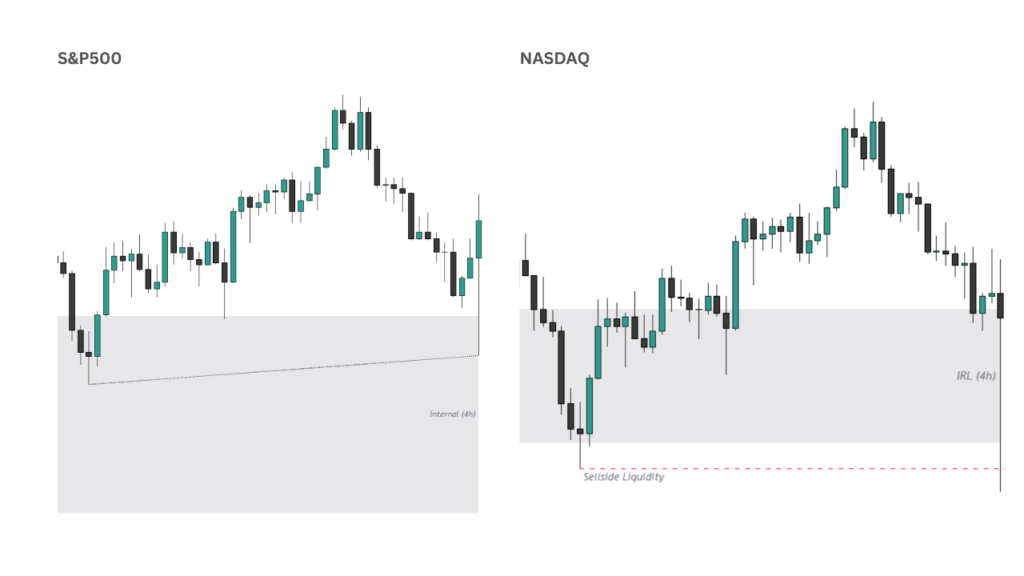
At the open, price behavior confirmed the narrative.
Key Observations
NASDAQ:
- Took sell-side liquidity
- Showed weakness
S&P 500:
- Did not take sell-side liquidity
- Held structure
- Formed bullish SMT vs NASDAQ
5M CSD confirmed reversal in favor of higher timeframe bias
This was a classic strength vs weakness setup.
📌 Conclusion: NASDAQ = weak, SPX = strong → Trade the strong asset.
(Execution timeframe charts attached below)
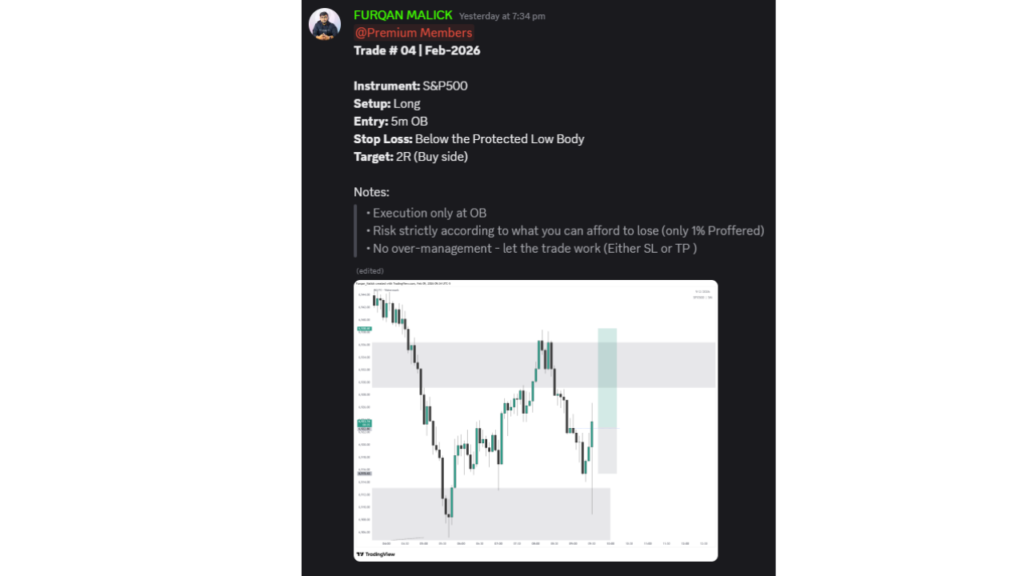
Step 5: Trade Execution (5M Precision Entry)
Execution Details
- Entry: 5-minute CSD confirmation
- Target: Most recent high
- Risk Management: Fixed, predefined
- RR Achieved: 2R
No chasing. No scaling mistakes. Just clean execution.
(Entry setup shared with the community, screenshot attached below)
Step 6: Result & Follow-Through
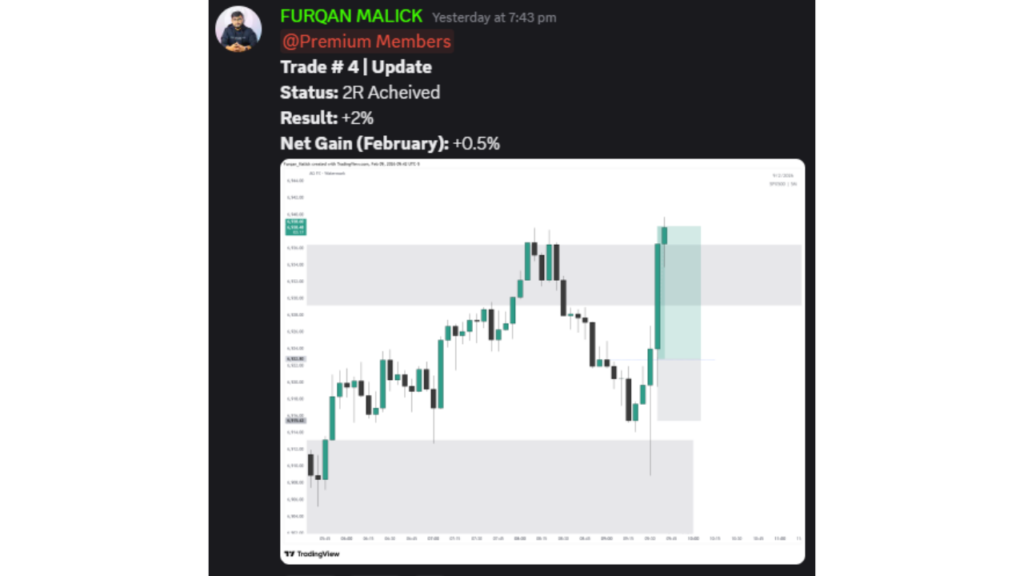
The trade played out exactly as planned:
- Target hit
- 2R achieved
- Execution aligned with bias, SMT, and structure
(Trade idea & result screenshot attached below)
Key Lessons from This Trade
- Bias must come from a higher timeframe structure
- SMT adds confidence, not entries
- Execution happens only after confirmation
- Patience around the NY Open matters
- Trade strength vs weakness, not emotions
This was not a random setup – it was a process-driven trade.
Final Thoughts
This is how trading should be approached:
- Plan first
- Wait second
- Execute last
Inside the L.A.S.E.R Trading Club, this process is repeated daily – not to chase wins, but to build consistency over time.
Want to see how these gameplans are built and executed live every week? Join the L.A.S.E.R Trading Club and trade with structure, not random signals.